
When I was a young adult, I casually wrote short stories and essays and even took a creative writing class in which I completed two chapters of a novel. But as a single mother working and caring for my three children, I didn’t have the time to devote to writing novels. Still, I put “write and publish a book” on my lifetime goal list, hoping to accomplish it one day.
I married again, and decades went by while those two chapters sat in my filing cabinet. Then one day, when my youngest daughter and I were talking about writing (she is a graphic designer and blog writer and is working on a book), I remembered those two chapters. I pulled them out of the filing cabinet and decided that, as a retiree, I had no excuse now. I should sit down and see if I could complete a full novel. “After all,” I said to myself, “isn’t writing a book on your list of lifetime goals?”
I had read enough books on writing to know that many writers find mornings to be their most productive writing time. As an early riser, that worked for me. So, on the first morning of my new writing life, I got up while my husband lay sleeping, padded into the kitchen, made a percolator full of coffee, and, with coffee mug in hand, sat down at my computer.
I began by reading the two chapters I’d written decades ago. I liked my opening paragraph but wasn’t terribly inspired by the storyline. I still like my protagonist, Amelia, but I changed her situation. The charming, seafaring captain could stay, but I changed his name and other details and began making up the rest.
My process each morning was to reread what I’d written the day before, edit it, make necessary changes, and then write some more. I wrote “by the seat of my pants,” letting my imagination carry me. If you have read my blog post, “The Wild Imagination of a Writer,” you’ll understand that coming up with ideas is no trouble at all for me.
I kept track of my daily word count and running total and recorded them in my daily journal. I know there are writers who don’t agree with this practice, but I found that it kept me motivated.
Eventually, after much writing, I found that Amelia’s cousin, Lucy, was taking over the story with her own troubles. So, I had to get rid of Lucy entirely. That dramatically cut my word count, but it was necessary.
As I completed each chapter, I read it aloud to friends and family. They pointed out repeated words and places where something wasn’t clear. Beyond that, I had no editor, human or otherwise. This was before I’d heard of editing subscriptions, and AI editing tools didn’t yet exist.
Just five months after I began writing my novel, I finished it. My novel still needed at least one more read-through, and I was about to begin that process when something horrible and terribly unexpected happened.
My husband had been complaining of headaches, and when they became so severe that the advice nurse on the phone told him to go to the ER, we did as we were told. After twelve hours in the ER, my husband was sent for a CT scan, and we learned that he had a tumor in his brain. We were devastated. A few days later, we learned that it was likely the result of melanoma that had metastasized, something we thought had been successfully treated when the melanoma was removed from his back five years earlier.
A month later, after we had begun to feel hopeful, with my husband started on immunotherapy and radiation, I sat at my computer and wondered what to do with my novel. I didn’t have the energy or focus for reading and editing. I just wanted to be done with it. My husband took priority, and I wanted to focus my energies on him. But I didn’t want the novel sitting in my filing cabinet again for an undetermined number of years, either.
So, I found a photograph that sort of looked like the English coastline, created my KDP account, and learned how to upload the novel to Amazon’s Kindle Direct Publishing platform.
When it went live, I was thrilled. I had finally written a book, a longtime dream of mine. But until I held that printed copy in my hands, I didn’t quite feel like a novelist.
When the book arrived a couple of weeks later, I smoothed my hand over the glossy cover and felt proud that I’d finally written and published a book. But as I skimmed through it, I found areas that needed editing. I corrected the errors and uploaded my manuscript once again.
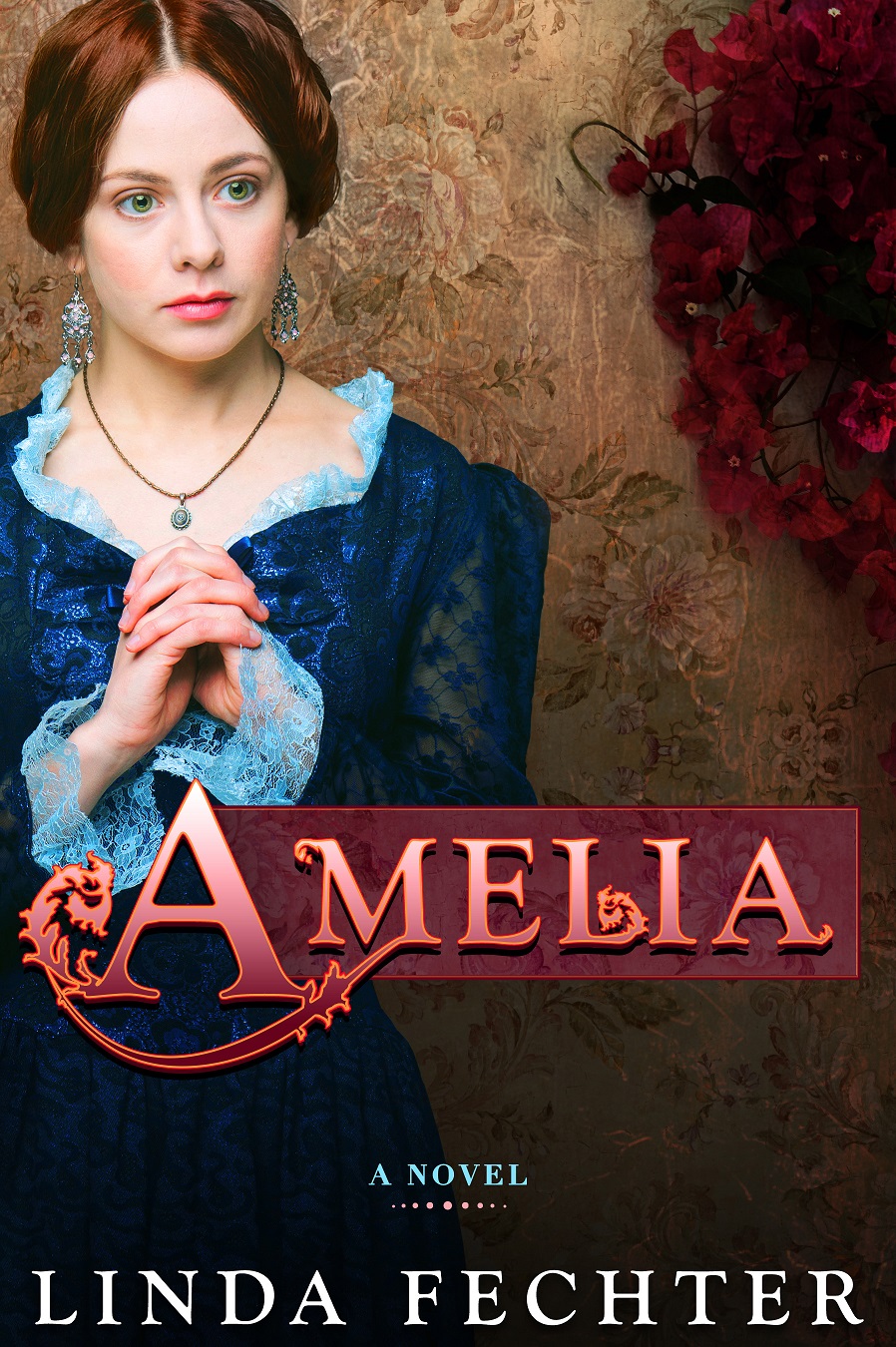
I later changed the cover to one of Amazon’s generic covers. It was pretty, and I posted my novel on my blog and my personal Facebook. Later, my daughter found time to create a beautiful, professional cover using an image I bought on Shutterstock.
Five months after I first published my novel, the new cover helped propel Amelia to No 16 in Kindle’s Victorian Historical Romance category. I was elated!
Amelia, my first novel, continues to be my best-selling novel so far, with readers around the world, including in Australia, Spain, Germany, India, Brazil, France, Italy, the United Kingdom, Canada, and the United States.
Discover more from Linda's Writing World
Subscribe to get the latest posts sent to your email.

